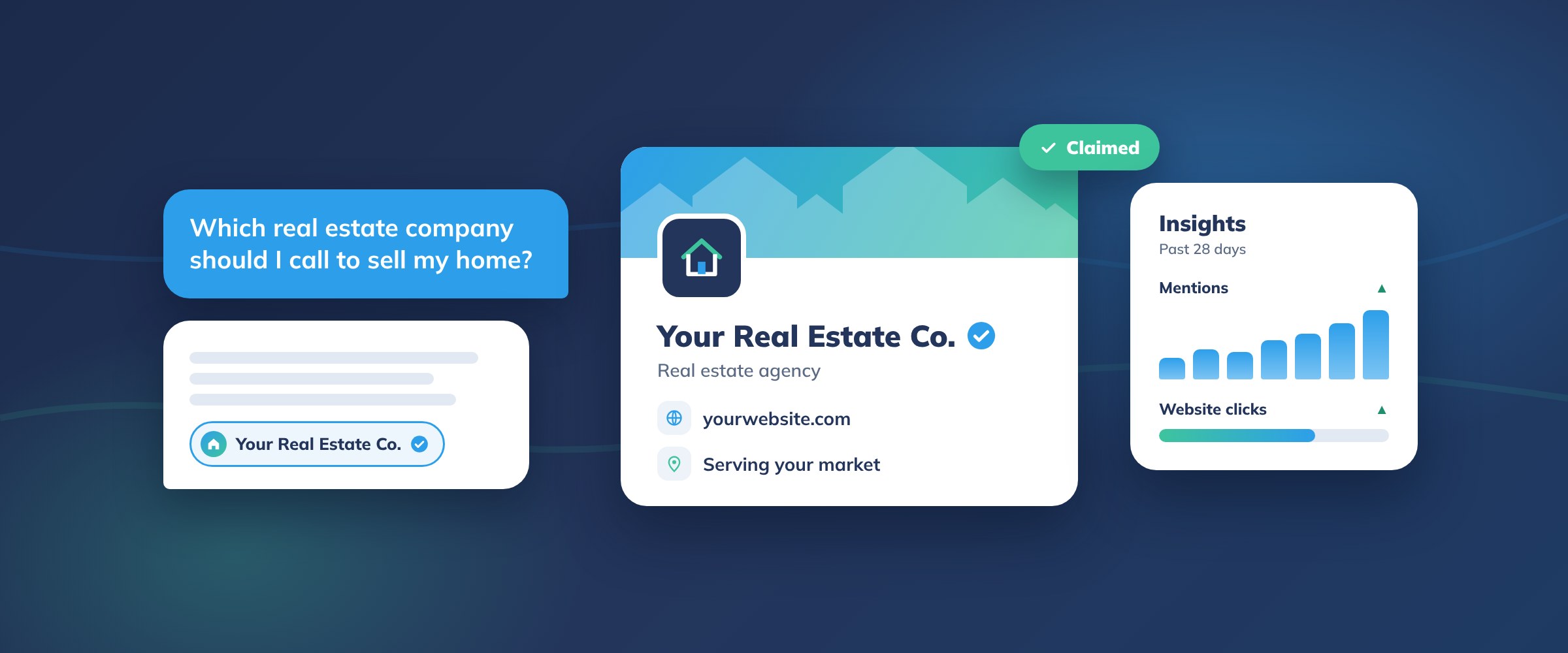

On November 10, 2026, OpenAI introduced Businesses in ChatGPT in beta. Through a new Business Hub, companies can claim their business in ChatGPT and manage the information people see. OpenAI pitches it as a new way to connect with “the 1.2 billion people who use ChatGPT each week.”
For real estate professionals, it’s the first official way to shape how your company appears inside ChatGPT, where Zillow, Redfin, and Realtor.com have already set up shop.
We’ll keep tabs on this new feature and how you can best use it to help your real estate business get found in AI Search. Keep reading to learn what we know so far about this feature and stay tuned as more develops.
What claiming your real estate business in ChatGPT does today
Claiming happens in Business Hub, which you open from the ChatGPT sidebar. According to OpenAI’s setup guide, you verify your connection to the business by phone, email, or a DNS record on your website. Then you pass an identity check through Persona before you can publish edits or view insights.
What you control once approved
| Feature | What it does | Open to real estate today? |
|---|---|---|
| Profile details | Update your website, description, category, and logo, and add a cover photo. OpenAI reviews changes before they’re published. | Yes, once verified |
| Insights | Mentions, website clicks, and discovery topics from the past 28 days | Yes, once verified |
| Business Agent | A clearly labeled chat that answers questions using information you provide, then links people to your website | Not yet. Limited to eligible U.S. ecommerce and online service businesses with a website. |
Some important notes from OpenAI’s help center before you start: Claiming “doesn’t guarantee increased visibility or give you direct control over ChatGPT’s independent recommendations.” And, only unpublished drafts can be deleted. OpenAI Support can’t delete, unpublish, or hide a published profile, so be sure to check every field before you submit.
Why it matters for real estate agents and Brokers
ChatGPT already talks about real estate companies whether they’ve claimed a profile or not. Claiming is how you make sure what it says is accurate and can point people to your website.
The portals got there first
Zillow launched an app inside ChatGPT in October 2025. Redfin followed in February 2026, and Realtor.com added its own in March 2026. When a buyer asks ChatGPT about homes in your town, those portals are ready to answer. A claimed profile gives your brokerage its own verified presence in the same conversations.
You can correct what ChatGPT shows
OpenAI’s Businesses in ChatGPT policy says profiles “may also include information from other sources.” If you haven’t claimed yours, you’re relying on whatever ChatGPT pieces together about you. Claiming lets you supply your own website, description, and category, along with your address or service area. Small errors there decide whether you show up when someone asks for a listing agent in your area.
You finally get data on AI visibility
Business Hub shows mentions and website clicks from the past 28 days. It also lists discovery topics, which OpenAI describes as “common themes in ChatGPT answers that mentioned or cited your business.” Though OpenAI doesn’t share individual prompts or conversations, you can use the list of themes as a ready-made list of community pages and buyer guides to write next.
Your website does the heavy lifting
OpenAI counts mentions differently depending on your business type. For an online business, a mention counts only when ChatGPT references its website, and the brand name alone doesn’t count. For a local business, a mention counts when ChatGPT shows a result for that location. Either way, your website is the main source you control, so thin neighborhood pages and outdated bios can cost you here too.
What’s likely coming soon
OpenAI calls this launch “an early step” and says it plans “to expand Businesses in ChatGPT and Business Agents to more markets and business categories, and build tools for organizations with more complex needs.” It hasn’t shared timelines, so the last column below is our read on what each change could mean for real estate.
| Development | Where it stands now | What it could mean for real estate |
|---|---|---|
| More business categories | Local stores and restaurants can claim only an existing U.S. listing. OpenAI’s policy says it may hold off on some categories “until we have the safeguards needed to support them responsibly.” | Watch for wider access for service businesses. Claim what you can now so you’re ready when it opens up. |
| Business Agents for more industries | Limited to eligible U.S. ecommerce and online service businesses. Agents explain offerings and link to your website, but can’t make bookings. The Business Agents Policy bars advice “that legally requires a professional license.” | A brokerage agent could answer questions about your services and offices, though it couldn’t replace a licensed agent’s advice. |
| Sponsored Agents | Announced September 16, 2026 and being tested with select U.S. advertisers. Someone clicks a ChatGPT ad and opens a labeled chat with the business’s agent. | Paid placements that start a conversation with your brand. OpenAI says advertising doesn’t influence ChatGPT’s independent answers. |
| Multi-location management | Per OpenAI’s help center, each brand is managed separately, and central management across a parent company’s brands and locations isn’t available yet. Claiming the main brand doesn’t claim its locations. | Multi-office brokerages and franchise affiliates should plan to claim offices one at a time for now. |
| Pricing | Free during the beta, per Digiday. OpenAI’s VP of monetization, Benji Shomair, didn’t rule out charging later. | Claiming now costs nothing but time. |
What to do now
The beta is open, so the best move is to start the claim this month and get your details right before the profile goes live.
- Search for your company in Business Hub. If you find your listing, start the claim. If someone else already claimed it, use Dispute ownership on the profile.
- Have the Broker or an authorized manager handle it. The profile belongs to the company, so it shouldn’t sit under one agent’s personal ChatGPT account. Make sure you can receive a code at the business phone or email, or edit your domain’s DNS, and keep the documents Persona may ask for on hand.
- Review every field before approval. Published profiles can’t be deleted or unpublished, so confirm your category and service area first.
- Write a clear, specific description. Name the areas you serve and the kinds of clients you work with, and skip guarantees, which OpenAI’s policy prohibits.
- Keep your contact details consistent everywhere. OpenAI notes that ChatGPT “may also draw on other sources,” so your company name, address, and phone number should match across your website and every directory listing.
- Claim each office separately. A main brand claim doesn’t cover individual locations.
- Review your insights every month. Watch whether mentions and clicks rise, and turn discovery topics into new content for your site.
How Union Street Media can help
A claimed profile tells ChatGPT who you are. Your website is what ChatGPT reads when it decides whether you’re the right answer for someone asking about homes in your market. Union Street Media builds real estate websites and content designed to perform in both traditional and AI search.
Want to see how your company shows up in AI search today? Request a free AI visibility audit.