

I recently had the chance to join a webinar with Renowned to talk about something that’s becoming impossible to ignore in real estate right now.

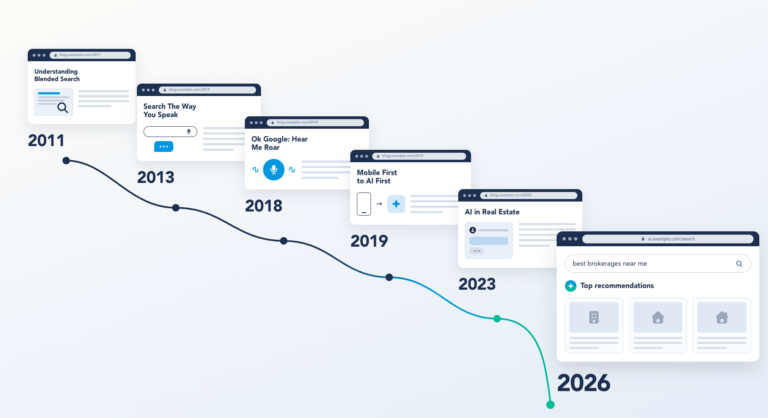
Getting a client isn’t just about referrals or website traffic anymore. It’s about showing up in the places people are actually asking questions, and more and more, those places are powered by AI.
What I’m seeing across our clients is a growing pressure to “rewrite everything for AI.” And while I understand where that’s coming from, it’s not exactly the right way to think about it.
For a long time, content drifted toward being written for search engines. It became overly optimized, templated, and in a lot of cases, less helpful to actual people. What’s happening now with AI is less of a disruption and more of a correction. You’re being rewarded again for being clear, direct, and genuinely useful.
That’s the shift.
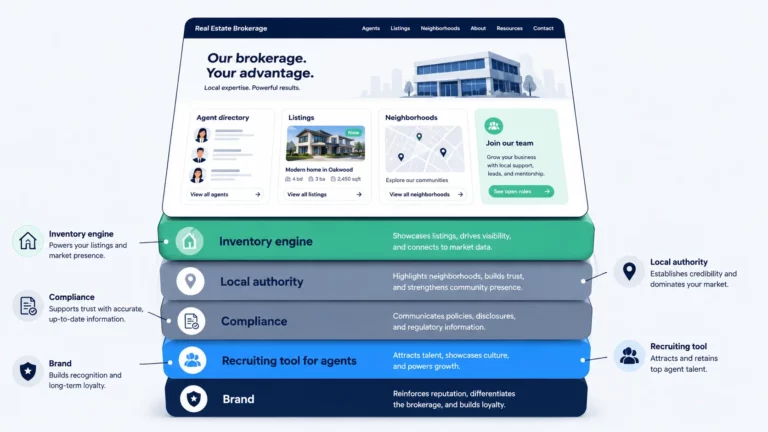
Most real estate websites today were built to look good and convert leads, and that’s still important. But they weren’t built to be understood, verified, or trusted by AI. And that’s where the gap is starting to show.
AI doesn’t experience your website the way a person does. It’s not browsing, clicking around, or forming an impression. It’s scanning for structured answers to very specific questions. If your content isn’t organized in a way that clearly answers those questions, you’re often invisible in that layer of discovery.
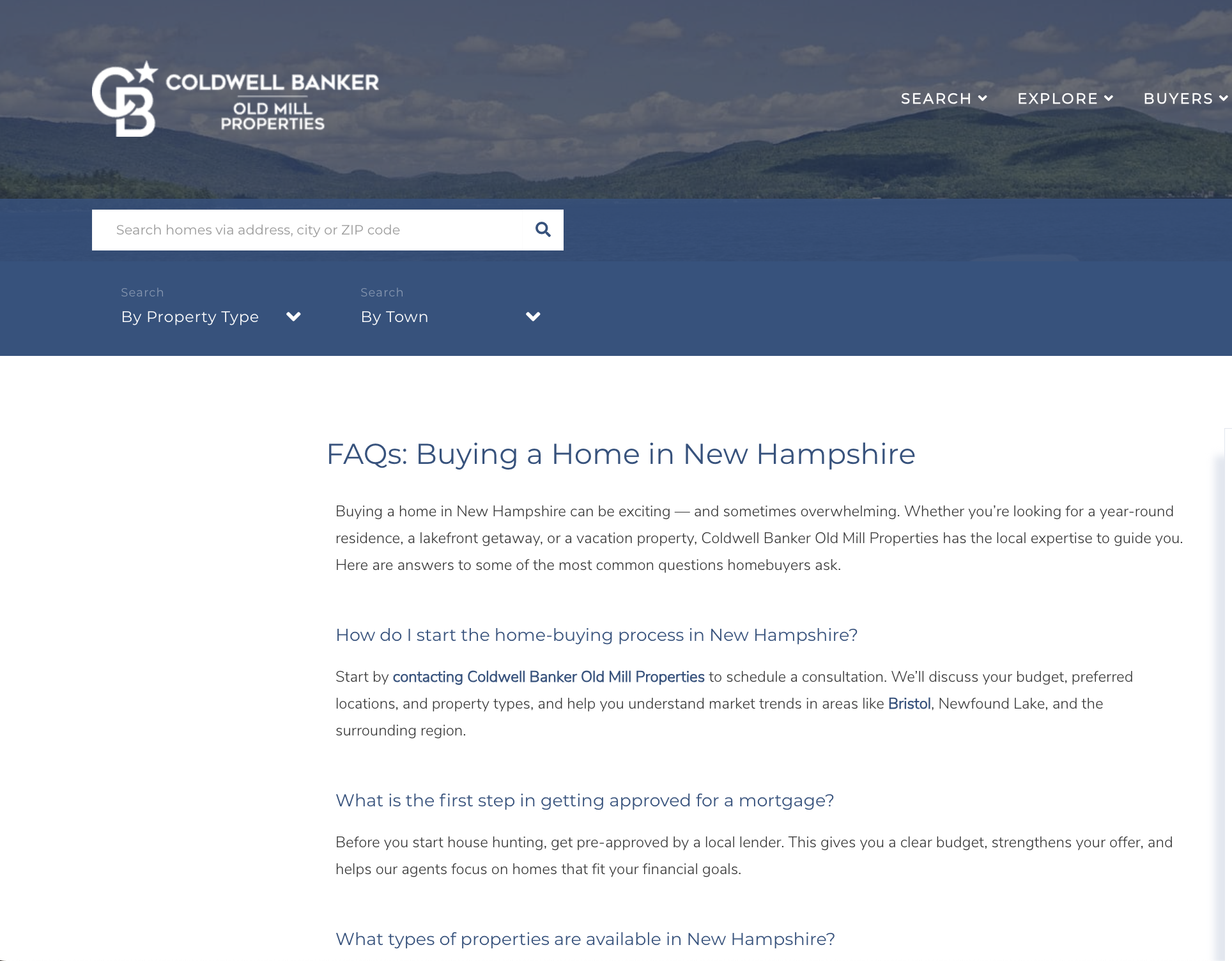
One of the simplest ways we’re addressing this is by introducing more structured, FAQ-style content. Not because it’s trendy, but because it reflects how people actually ask questions in AI tools and how those tools return answers. It forces clarity. It forces relevance.
But structure alone isn’t enough.
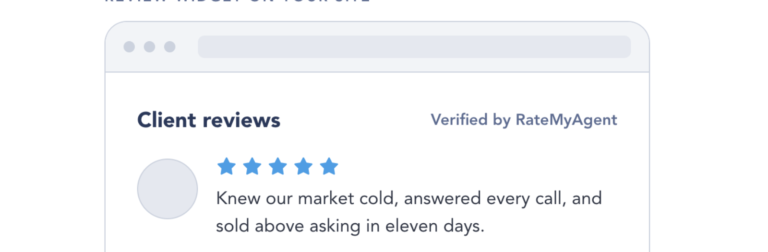
What’s becoming increasingly clear is that AI is looking for proof, not just presence. It’s not just reading your website, it’s cross-checking it. Your reviews, your social presence, your third-party profiles, and your messaging across platforms all play a role in whether you’re seen as a credible source.
Consistency is becoming a real visibility factor. If your name, your positioning, or even your messaging shifts from platform to platform, it creates uncertainty. And when AI isn’t confident in what it’s seeing, it’s less likely to surface you.
At the same time, generic content is losing ground. What’s winning now is real local authority. What you actually know about your market, what you’ve done, and what you can support with real data. The more specific and grounded your content is, the more valuable it becomes.
From our side at Union Street Media, this is something we’re actively evolving around. We’re continuing to make structural changes to our websites so they’re not just optimized for Google, but built in a way that AI can crawl, understand, and trust. Because what works in traditional search doesn’t always translate directly here.
We’re also using AI behind the scenes to connect multiple data points, things like search behavior, on-site activity, and filtering patterns, to better understand what people are actually looking for. Not just broadly, but within each client’s specific market and audience. That allows us to build content and campaigns that answer real questions, not just target keywords.
There’s a lot of conversation right now about whether SEO is going away. It’s not. It’s expanding.
If you’ve already built a strong foundation, this is about refining it and making it work in this next layer of search and discovery. And if you haven’t, there’s a real opportunity right now to get ahead of where things are going. This shift is happening quickly, but it’s still early. The brokerages and agents who adapt to it now will stand out as it becomes the standard.