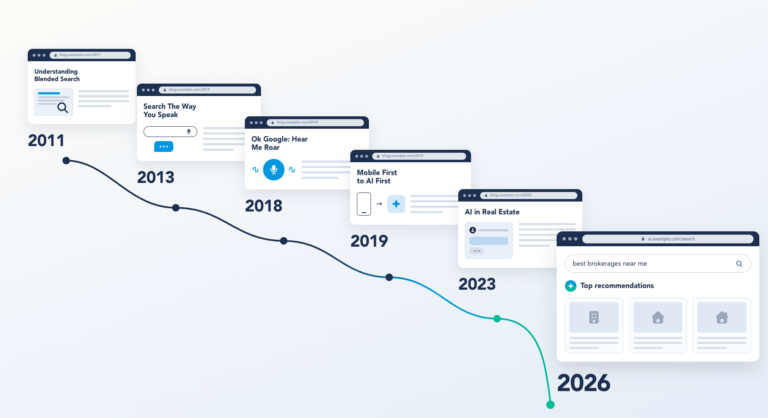


Behavior is shifting fast, and major portals are already building for a day when home search begins with a conversation, not a filter menu.
A survey found that 82% of recent or prospective home buyers and sellers had used AI for real estate research. ChatGPT led at 67%, with Gemini at 54% (source). Buyers aren’t typing a city, price range, and number of bedrooms into a search bar. They are asking full questions about neighborhoods, affordability, lifestyle, and the kind of home they want next. The infrastructure of real estate websites wasn’t built with that in mind. Our engineering team has been quietly working to change that.
AI search is now part of the buyer journey. It does not replace SEO.
Google has stated clearly that its AI features, including AI Overviews and AI Mode, are grounded in the same ranking and quality systems as traditional Search. From Google’s own perspective, optimizing for AI search is still optimizing for search. The technical foundation matters as much as ever: pages must be fast, crawlable, indexable, and genuinely useful to the person searching.
That’s the part of the conversation most “AI for real estate” content skips over. AI visibility is not a separate content trick layered on top of SEO. It depends on the same underlying foundation, which is exactly where things get interesting for real estate websites.
Why Listing and Search Pages Are the Heart of Real Estate SEO
Real estate SEO lives or dies on inventory pages. A brokerage with a strong inventory presence ranks for the searches that drive buyer traffic, like:
- Homes for sale in [city]
- [Neighborhood] condos
- Waterfront homes in [market]
- 3-bedroom homes under $500K in [area]
There are thousands of them per client. They refresh constantly as inventory turns. Done right, they generate a steady stream of inbound buyer traffic that builds over time. They’re also the most technically complex pages on the site, because they have to feel fast and interactive for users.
Why JavaScript-Heavy Pages Are a Real Challenge
We’re going to get a bit technical here, but stay with me. Most modern real estate websites are built to feel like apps: Maps update without page reloads, filters apply instantly, and saved searches sync in real time using JavaScript. That’s good for users. It also makes those pages harder to optimize for discovery.
Google has been clear in its own documentation about why: Not all bots can run JavaScript. JavaScript-driven pages can require a separate rendering step before Google sees the actual content. In other words, if your website hides important information until a browser runs JavaScript, some search engines may never see it. Google recommends building websites so the content is visible from the start, making it faster and easier for search engines to understand what your site is about.
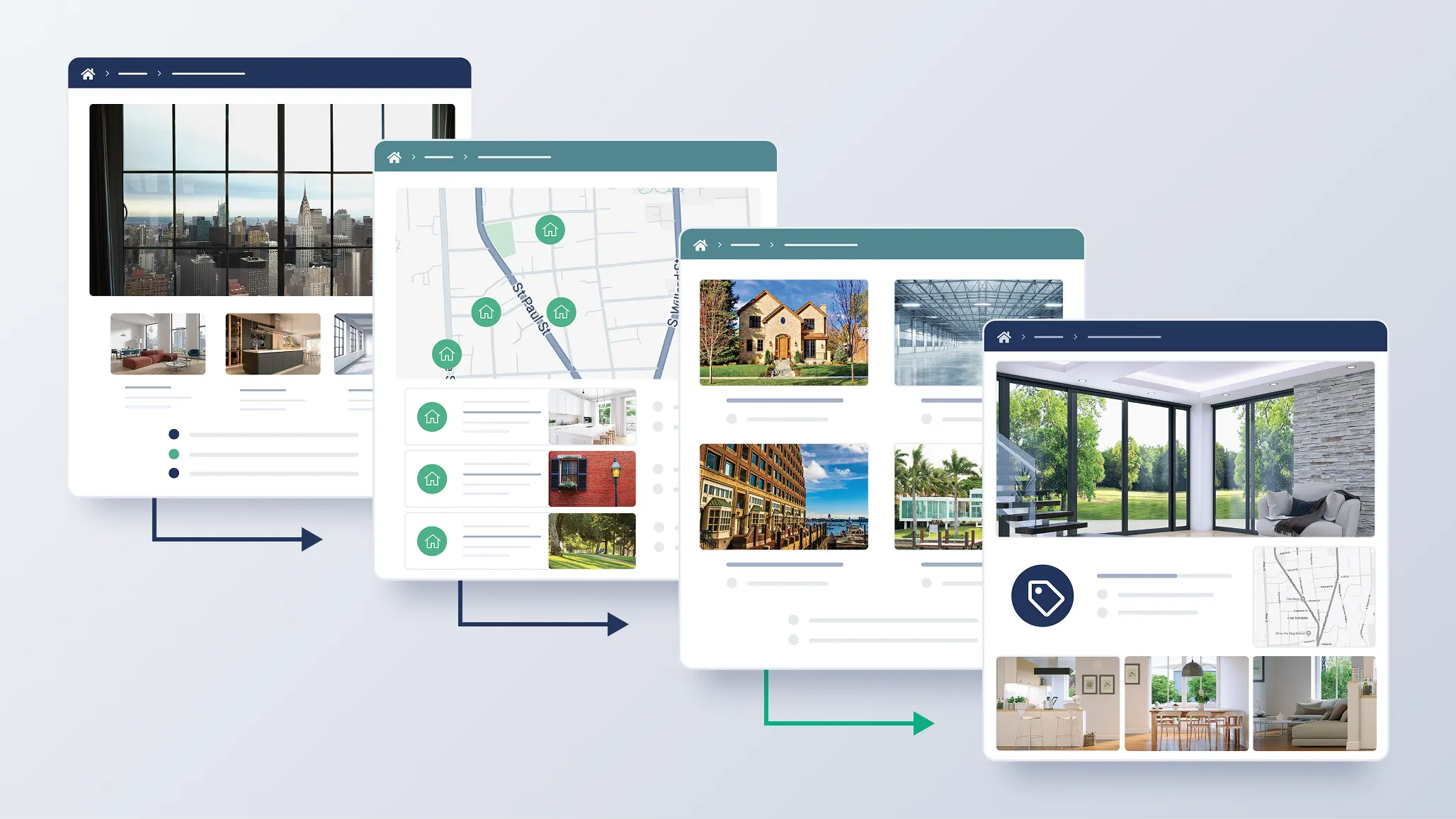
This notion applies even more to the crawlers and AI systems that now play a role in how people discover real estate. A property search page can look perfect to the person using it and still be harder for the systems shaping discovery to understand if the most important information only appears after JavaScript loads.
This is the engineering tension. The most valuable pages on a real estate website (search results, listings, recommended searches) are usually the most dynamic. Solving for AI visibility by stripping that experience hurts the user and hurts the brand. Ignoring it leaves real estate traffic exposed as discovery shifts.
What We Built
Over the past year, our engineering team rebuilt how our most SEO-critical pages get delivered:
- Crawlers and AI systems see a complete page on first look. The content, the structure, and the connections between listings, neighborhoods, and searches are present from the moment they arrive.
- The user experience did not suffer. Our industry-leading Map Search, instant filtering, saved-search functionality, and real-time inventory updates all still work the way users expect.
- The pages describe themselves more clearly. Search systems categorize and recommend sites based on what they understand about them.
- Internal connections between pages are visible. The web of links that signals authority and topical depth is no longer hidden behind interactivity.
The pages still feel fast and dynamic for users, and they now also read clearly to Google and the new set of systems shaping how people find real estate online.
We’re Solving at the Platform Level
Much of the current conversation about AI visibility in real estate is happening at the content level. Write more FAQs, add more schema markup, and use AI to generate additional pages.
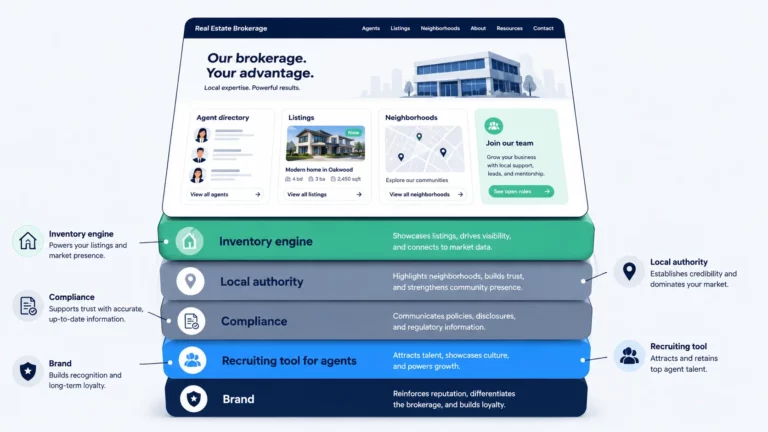
Those aren’t wrong. They’re also not enough. Real estate websites need more than AI-written content. They need the technical infrastructure that makes their core inventory, local expertise, and search pathways accessible to the systems people use to ask questions.
We’re not treating AI visibility as a content trend. We are solving it at the platform level, where it matters most: the pages buyers use to find homes, explore markets, and take the next step. Recommended search pages, listing experiences, and neighborhood pages. These aren’t only website features, they’re discovery assets. We’re building them for both the buyer in front of the screen and the systems that need to understand the page before they can surface it.
Common Questions
Is SEO going away as AI search grows?
No. Google stated that its AI features are grounded in the same ranking and quality systems as traditional search. The foundation of strong SEO (fast, crawlable, useful pages) is the same foundation AI visibility depends on. The work is expanding, not being replaced.
Why do JavaScript-heavy pages create a challenge for AI search?
Google itself recommends server-side rendering or hydration as stronger long-term solutions than browser-side JavaScript alone, because not all bots can run JavaScript, and JavaScript-driven pages often require a separate rendering step before crawlers see the content. As more systems beyond Google enter the discovery layer, that gap matters more.
What kinds of pages matter most for real estate AI visibility?
The same ones that drive real estate SEO. Listing detail pages, search result pages, recommended searches, and neighborhood content. They carry the inventory, the local expertise, and the internal structure that signal what a brokerage actually knows and serves.
See What Search Systems Actually See on Your Site
If you’re not on our platform, your inventory pages may be doing less work than you think. We’ll run a free site audit and show you what Google and AI systems see when they crawl your site, what they are picking up, and what is harder for them to access.