
I’ve been getting asked some version of this question a lot lately. “Can I just paste my URL into ChatGPT and ask it what’s wrong with my site?” Technically, yes. Practically, it depends. If you want general directional advice, AI tools can give you something. If you’re trying to make actual decisions about your real estate website, the answer you get back can range from helpful to vague to actively wrong in ways you won’t immediately notice.
Or I’ll get sent a nine-page audit, generated by Claude this time, written with total confidence but devoid of cited substance. Regardless of the AI tool, the pattern shows up across all of them. It’s not all bad. As a marketer, I love that people want to improve their sites, and AI is making it easier to try. There’s still a case to be made for leaning on experts.
I’m saying this as someone who uses AI every single day. Our team has been using it to generate, refine, optimize, and analyze content and data for years. I’m a fan. That’s why I want to be honest about the limits and best practices.
One quick note: we’re going to talk about ranking in AI search a lot. Some people call it GEO (Generative Engine Optimization), some say AEO, some say AI-SEO. The acronym is genuinely still being argued about. I’m using GEO because it’s short, and because I keep accidentally singing E-I-E-I-O when I try to type the alternatives.
The Problem Isn’t AI. It’s the Gap Between AI and Your Specific Business.
Generic AI tools (ChatGPT, Claude, Gemini, all of them) are trained on the entire internet. That’s powerful for some things. It’s a real problem when you’re asking about a niche industry with specific rules, specific page types, and specific stuff that matters that doesn’t matter in any other business.
Ask any of them “how do I rank in AI search?” and you’ll get a clean-sounding answer about structured data, helpful content, and E-E-A-T (Google’s framework for Experience, Expertise, Authoritativeness, and Trustworthiness). It’ll be 80% right and 20% generic-internet-marketing-blog. The 20% is where the trouble starts.
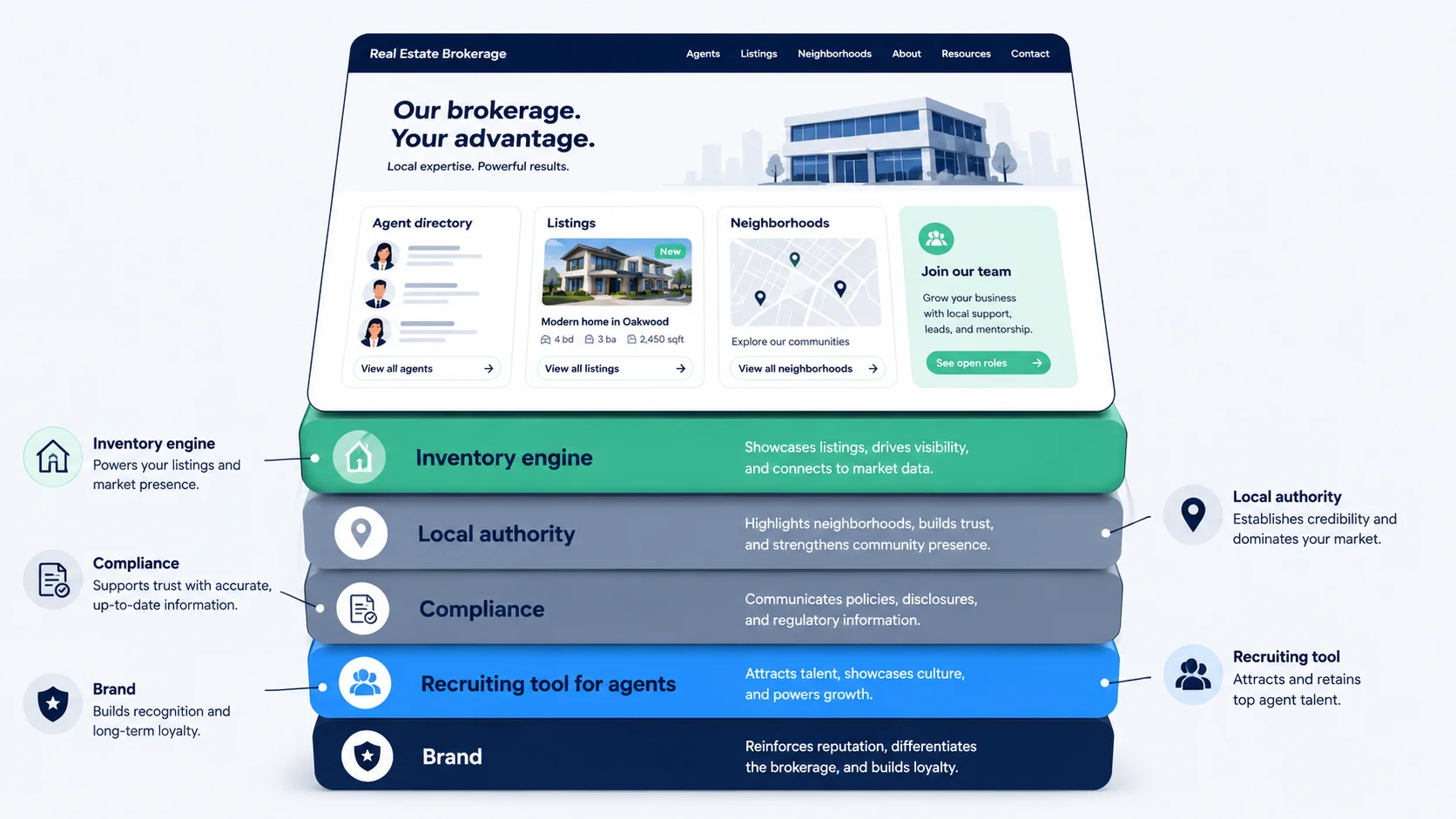
A real estate website isn’t just a website. It’s an inventory engine, a local authority signal, a compliance document, a recruiting tool, and a brand all stacked on top of each other. Generic AI doesn’t know what an IDX feed is, what a recommended search page does, why a Fair Housing language audit matters, or what NAR’s latest guidance says about buyer agency. It’ll cheerfully give you advice that sounds right and isn’t.
The First Thing to Check: Can the AI Actually See Your Site?
Before any audit conversation, paste this into whatever AI tool you’re using:
“Please describe exactly what you see when you load [your URL]. What text is on the page? What links are visible? What images can you access?”
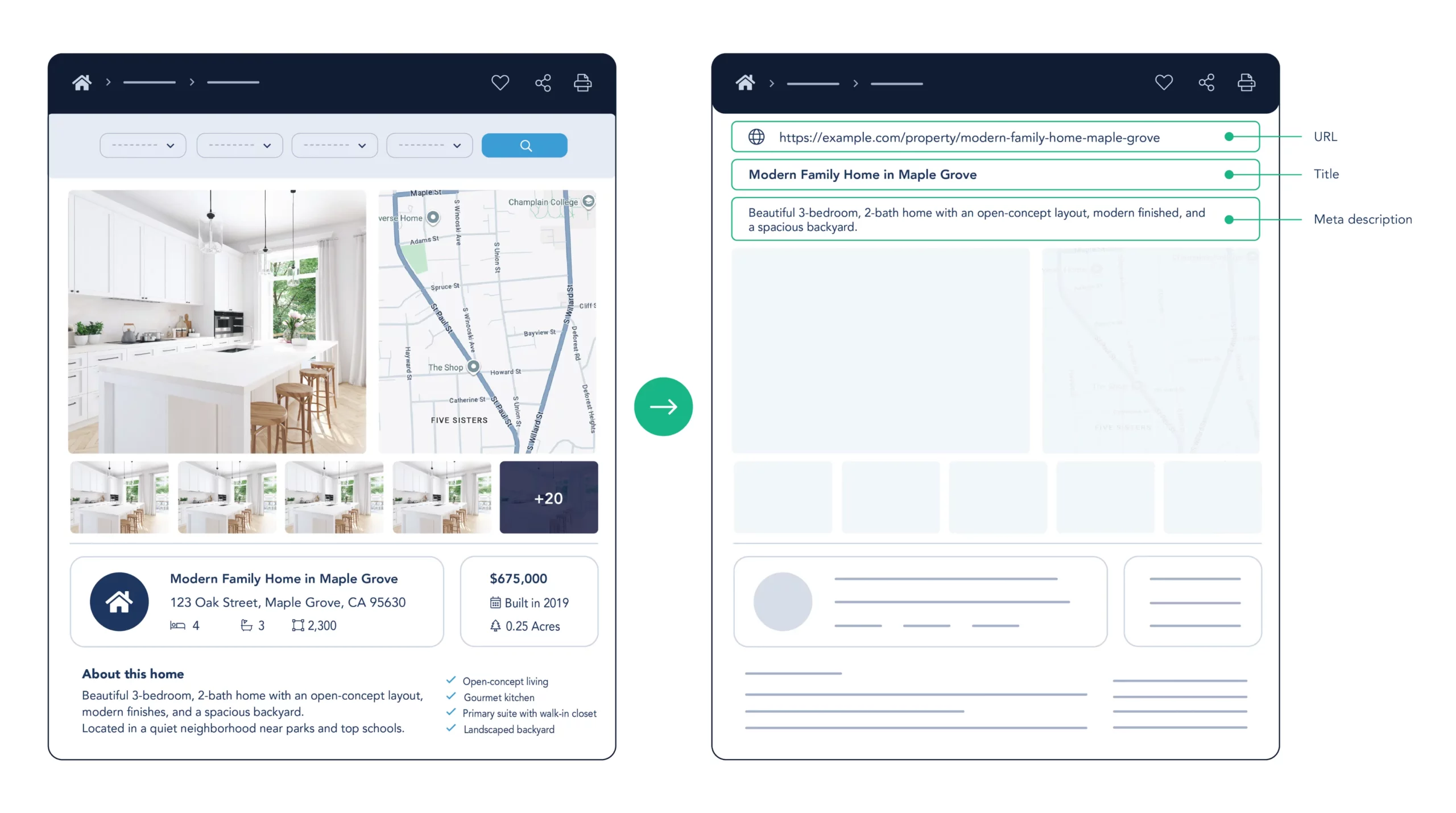
Here’s the catch most people miss: AI tools often won’t tell you when they couldn’t read your site. They’ll read what they CAN see (your URL, your title tag, maybe your meta description) and confidently assume the rest. The audit comes back looking authoritative. The advice was built on a guess. You can get off reality very quickly without ever realizing it.
A lot of real estate websites are heavy on dynamic content (search results, listing pages, neighborhood data) that most LLMs don’t fully see. You may be auditing what the AI imagines your site looks like, not what’s actually there.
Robin wrote a whole blog on why that happens, if you want the technical version.
6 More Prompts to Vet AI Before Trusting Its Advice
If the AI passes the first test, here are six more prompts to run before you put any weight on its audit:
1. Check what it can actually see. “List the active listings currently shown on the homepage of [URL].” If it can’t list them, the dynamic content (most of what matters on a real estate site) is invisible to it.
2. Check recency. “What’s the most recent piece of content you can see on this site, and when was it published?” If the AI can’t tell or names something wildly out of date, you’re auditing a stale version of your site.
3. Test domain knowledge. “What specifically should a real estate website do differently from other small business websites to rank well locally?” If the answer is generic (“use local keywords”), you don’t have a real estate audit. You have a generic marketing audit with a real estate sticker on it.
4. Force it to cite. “Quote the exact text from the page where you’re getting [specific claim].” If it can’t quote the source, the claim isn’t real.
5. Cross-check. Ask the same question two different ways. If the answers contradict, the AI is guessing. Helpful guesses still aren’t trustworthy advice.
6. Test compliance awareness. “What Fair Housing or NAR-related language issues should I be checking for on this page?” If the AI doesn’t mention protected classes, steering language, or current buyer agency rules, it shouldn’t be auditing real estate content.
… OR … you could benefit from all our trial and error.
What a Union Street Media SEO and GEO Audit Catches That ChatGPT Misses
Our team has spent years building something most generic AI tools don’t have: a deep, constantly-updated context layer specific to real estate. Thousands of pages of structured knowledge about how real estate websites actually work. Page types. SEO patterns. GEO best practices. Compliance requirements. The specific stuff that’s wrong with most real estate sites but doesn’t show up on a generic site audit checklist.
A Union Street Media SEO and GEO site audit looks for the things beyond the basic flags. Weak content patterns we’ve seen kill rankings on hundreds of brokerage sites. Specific Fair Housing language risks. Recommended search pages that look fine but aren’t doing the work they should be. The stuff a generic AI won’t catch because it doesn’t know to look for it.
The audit isn’t AI replacing humans. It’s AI doing what AI is good at (scanning at scale, pattern-matching across thousands of sites) used by humans who know what to do with the answers. That’s the part that doesn’t come in the box when you ask ChatGPT, or Claude, or any of these tools directly.
Common Questions
Can I just use ChatGPT or Claude to audit my site for free?
You can. Just know the limits. Generic AI doesn’t see most dynamic content, doesn’t know real estate-specific rules, and will give you advice that sounds confident whether it’s right or wrong. Use the prompts above to vet what you’re getting before you act on it.
What’s the difference between asking AI and getting a professional audit?
The professional version uses AI as a tool, not as the answer. The advice is informed by years of pattern recognition across real estate sites, current industry rules, and the specific issues that actually move the needle. That context is the difference between “your site could use more local content” and “your three weakest neighborhood pages are dragging down the authority of your top-performing search hubs.”
What does GEO stand for, since you’re using it?
Generative Engine Optimization. Optimizing your site to be surfaced in AI-generated answers. Some people call it AEO, AI-SEO, or other things. The work behind it is the same regardless.
Want the Audit That Actually Knows Real Estate?
If you want a site audit built on real estate context, not generic internet advice, we’ll run one for you. Our team will look at the SEO and GEO things ChatGPT and Claude can’t see and don’t know to check for, and walk you through what we find. No pitch. Just the audit.
Request your free Union Street Media SEO and GEO site audit
More on how we approach real estate digital marketing here.